
 info@dextera.lt


Quality and warranty
LLC DEXTERA warrants and confirms that all goods and products it sells comply with the standards and technical requirements applicable in the Republic of Lithuania, as well as with the requirements stipulated in the relevant sales agreement.
LLC DEXTERA conducts its business in accordance with the laws and regulations in force in the Republic of Lithuania and complies with all mandatory legal provisions.Free warranty service applies where defects in the product(s) are attributable to the manufacturer and are not the result of mechanical damage caused during use. The warranty period is:
24 months for private individuals;
12 months for legal entities (Articles 6.678 and 6.666 of the Civil Code of the Republic of Lithuania);
The warranty is provided upon presentation of valid proof of purchase. The warranty for products supplied by LLC DEXTERA takes effect from the date the invoice is issued.
The warranty does not apply if the product is used for purposes other than those for which it is intended and/or contrary to the operating instructions, including where the instructions for use are not followed or are followed incorrectly.
LLC DEXTERA labels its products with a trademark sticker. It is recommended that this sticker not be removed from the product. If the sticker is removed, the Buyer assumes full responsibility for any consequences arising from its removal.
The warranty does not apply if the product malfunctions as a result of improper installation carried out by persons other than authorised representatives of LLC DEXTERA.
For products with automated control systems, the warranty does not apply if a malfunction results from improper electrical connection of the installed product or if the product was connected to the mains electricity supply by persons other than authorised specialists of LLC DEXTERA.
The warranty for automation components also does not cover damage or malfunctions caused by voltage surges or other faults or disruptions in the mains electricity supply.
Pursuant to the Retail Trade Rules approved by Resolution No. 697 of the Government of the Republic of Lithuania of 11 June 2001 (as amended by Resolution No. 738 of 22 July 2014), goods of satisfactory quality cannot be exchanged or returned if they have been made to the consumer’s specifications, are not prefabricated and are produced on the basis of the consumer’s individual choice or instructions, or are clearly personalised to meet the consumer’s individual needs.
LLC DEXTERA incorporates advanced technologies into its operations, enabling the company to offer its customers products of exceptionally high quality. Please note that goods of satisfactory quality, including products sold by measurement that have been specially prepared, cut to size, trimmed or otherwise customised at the consumer’s request, cannot be exchanged or returned (Retail Trade Rules approved by Resolution No. 697 of the Government of the Republic of Lithuania of 11 June 2001, as amended by Resolution No. 738 of 22 July 2014).
If the delivered product does not meet the applicable quality requirements, or if the Buyer is dissatisfied with the shape, size, colour or model of the purchased product, the Buyer must contact LLC DEXTERA, provided that the product was not made to the Buyer’s individual specifications and is not subject to any statutory restrictions on exchange or return.
Products cannot be returned if they have been used, damaged or have lost their original saleable condition. Changes to the Product’s packaging that were necessary for the purpose of inspecting the Product shall not be considered material changes to the Product’s appearance.
If the Buyer damages the Product’s saleable condition, or if the Product loses its saleable condition as a result of the Buyer’s actions or omissions, the Buyer shall compensate the Seller for any resulting losses.
LLC DEXTERA accepts no liability for product measurements provided by the Customer.
The exact price of the Products is determined based on the Customer’s order and individual measurements. A minimum charge applies to Products with a total area of less than 1 sq. m (one square metre). This means that where the total area of the ordered Product is less than 1 sq. m (one square metre), the Customer shall be charged the full price applicable to 1 sq. m (one square metre) of the Product.
LLC DEXTERA offers a wide range of services to meet the needs of its customers. Among other services, subject to a separate agreement with the Customer, LLC DEXTERA can provide home delivery throughout Lithuania for Products purchased either with or without installation services. Delivery charges are calculated individually based on the Customer’s location.
When selecting the delivery service at the time of placing an order, the Buyer undertakes to provide the exact delivery address. The Buyer is fully responsible for the accuracy of the information provided. If the Buyer provides inaccurate or incomplete information, the Seller shall not be liable for any consequences arising as a result.
By signing the invoice or any other document confirming the handover and acceptance of the delivery, the Buyer confirms that the Product is new and free from any damage caused during transportation or other mechanical damage. Therefore, upon receiving the Products, the Buyer should always inspect the packaging for damage and check for any other visible mechanical damage or anything else that may indicate possible damage.
Before the specialists arrive to carry out the installation work, the area where the Product will be installed must be properly prepared. The installation area must be free from unnecessary items, construction dust and other dirt, and windows, window sills and surrounding surfaces must be clean.
Before any installation work involving drilling into walls is carried out, the Customer must inform the specialists of any electrical wiring, pipes or other utilities concealed within the wall at the installation location. Damage to wiring, pipes or other utilities during installation shall not be considered improper installation if the specialists were not informed of their presence before the work commenced.
Plaster that chips, cracks or falls away during installation shall not be considered a consequence of improper installation.
If a glazed unit is cracked or a window sill is broken or otherwise damaged as a result of improper installation, LLC DEXTERA undertakes to compensate for the resulting damage.
The colour shade, pattern or other similar characteristics of Products shown in product catalogues and/or on the website may differ from the actual colour shade, pattern or other similar characteristics of the Products. Such differences shall not be considered a Product defect:
- Slight colour fading;
- Uneven fading between areas of the product exposed to direct sunlight and those not exposed to direct sunlight;
- Fabrics used for roller blinds and vertical blinds are manufactured in batches. The colour shade may vary slightly from one production batch to another, with the degree of variation depending on the type of fabric. Therefore, the shade of the fabric used in the finished product may differ from the fabric sample shown in the catalogue. The shades of fabrics ordered at different times may also vary due to differences between production batches.If an identical fabric shade is required for several products, all such products must be ordered at the same time, and LLC DEXTERA must be informed that the products will be installed next to each other. This allows fabric from the same production batch to be used for all relevant products.
If products are ordered at different times, or are ordered at the same time without specifying that they will be installed next to each other, the fabrics may come from different production batches and their shades may therefore vary. Such variations are considered a normal characteristic of the fabric and do not constitute a defect; - Incomplete flattening of the roller blind fabric after it has been kept partially unrolled (mechanical memory);
- The roller blind fabric must not be unrolled to the point where fewer than one and a half turns of fabric remain around the roller tube. Unrolling the fabric beyond this point may cause damage, in which case the warranty shall not apply. Chain travel limiters prevent the fabric from being unrolled beyond the permitted limit;
- Minor misalignment of the fabric pattern geometry and symmetry in relation to the edges of the product;
- Slight stretching or waviness of the fabric caused by stresses occurring during use, such as tension, heat exposure, UV radiation, humidity or similar factors;
- Differences in colour shade between painted metal and/or plastic components of the same colour (minor where the RAL colour code is the same; more noticeable where the RAL colour codes differ);
- Slight variations in the colour shades and textures of wooden blind slats, bottom rails, headrail finishes and control wands;
- Minor mechanical imperfections in the wooden components of wooden blinds that are not visible from a distance of 1 metre;
- Touch-up painting of minor mechanical imperfections on wooden blinds using the designated colour in accordance with LLC DEXTERA’s manufacturing process;
- Painting of the cut ends of wooden blind components using the designated colour in accordance with LLC DEXTERA’s manufacturing process;
- Porosity at the cut ends of plastic blind components (visible exposed internal structure);
- Natural mechanical wear of moving and friction-exposed components resulting from normal use;
- Fraying of the fabric edges resulting from normal use due to friction against the window surface, glass, glazing beads, wall or product guide rails;
- Where fabrics with geometric patterns (such as stripes, squares, waves or similar designs) are used, the alignment of the pattern may not correspond exactly with the geometry of the Product; therefore, the geometric elements may not align precisely with the top, bottom or side edges of the fabric;
- The colour shades of painted aluminium profiles and plastic components may differ from one another;
Painted aluminium components are considered to meet the applicable quality requirements if there are no inclusions larger than 1 mm, the distance between adjacent minor inclusions exceeds 10 mm, and the average number of minor inclusions does not exceed 1 per dm²; - Paint runs are not acceptable; minor isolated scratches on the painted surface are permissible;
- No defects shall be visible to the naked eye from a distance of 3 metres when viewed at an angle of 60 degrees;
- The standard configuration of Products sold through the e.dextera.lt online store differs from that of Products ordered during a specialist’s visit due to specific manufacturing, transportation and installation requirements.
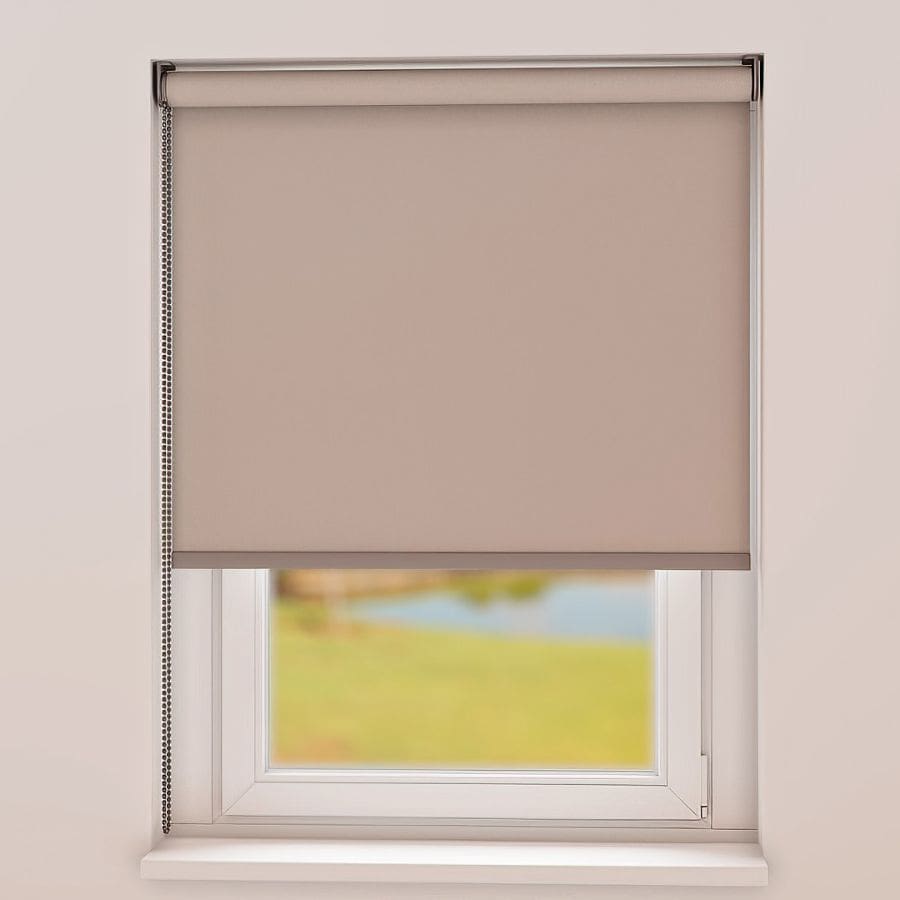
Product dimensions may vary by up to ±2 mm.
The roller blind fabric may stretch slightly when exposed to sunlight or other sources of heat, such as a radiator or hot air. This may appear as slight waviness or curved, “smile-shaped” distortions in the fabric. Once the temperature returns to normal, the fabric should return to its original condition.
The roller blind fabric must not be unrolled to the point where fewer than one and a half turns of fabric remain around the roller tube. Unrolling the fabric beyond this point may cause damage, in which case the warranty shall not apply. Chain travel limiters prevent the fabric from being unrolled beyond the permitted limit.
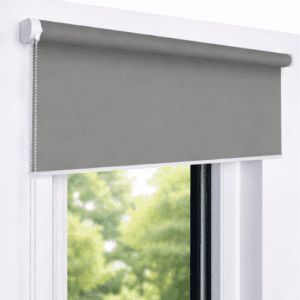
The roller blind is installed horizontally, irrespective of the geometry of the installation area. If the installation area contains surfaces that are not level or vertical, such as an irregular recess, uneven lintel, incorrectly aligned window or window sill, the geometry of the roller blind will not align with the surrounding surfaces.
The fabric must not be touched or rubbed along its edges, and the bottom rail must not be raised or lowered by hand.
Roller blinds must only be operated by means of a motor or control chain.
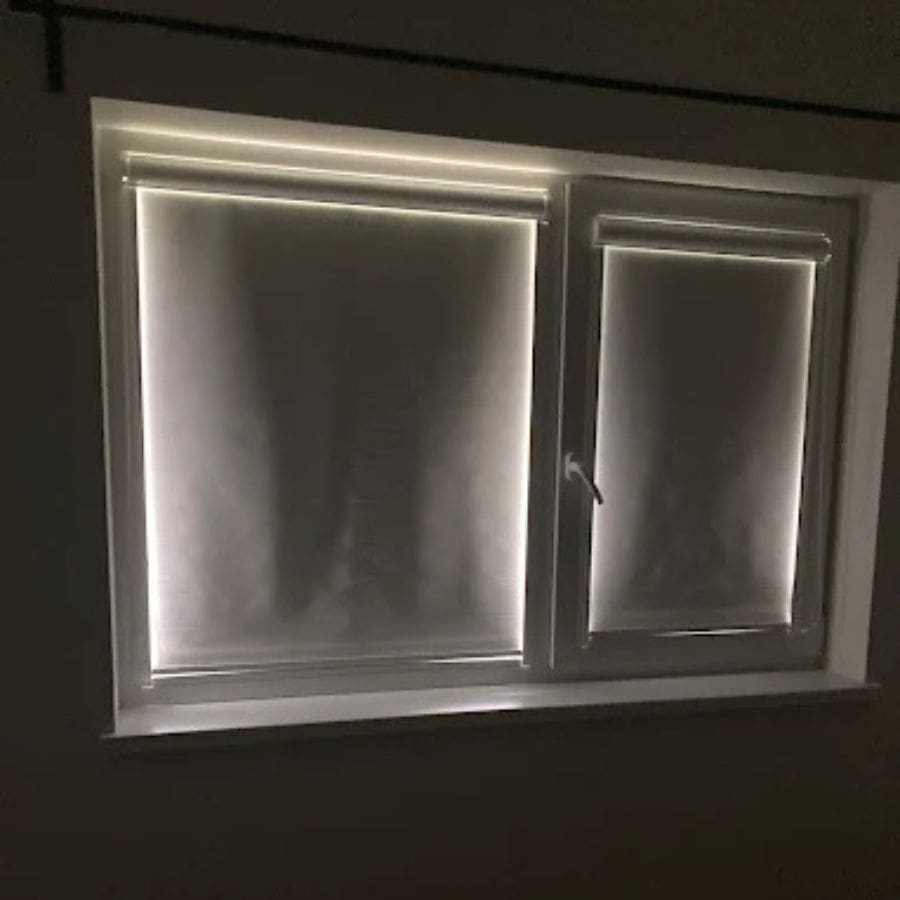
Roller blinds designed to darken a room (with Blackout fabric, fabric guide rails and a cassette) provide a high level of room darkening but do not guarantee complete blackout. A small amount of light may enter around the edges of the cassette, through the fabric guide rails or beneath the bottom rail. However, light must not pass through the Blackout fabric itself.
The light transmission of roller blind fabrics, other than complete Blackout fabrics, is expressed as a percentage and represents an average value. In day-night fabrics, some light may pass through visible openings in the fabric structure; this is a normal characteristic of the fabric. The number and distribution of these openings are not subject to specified tolerances.
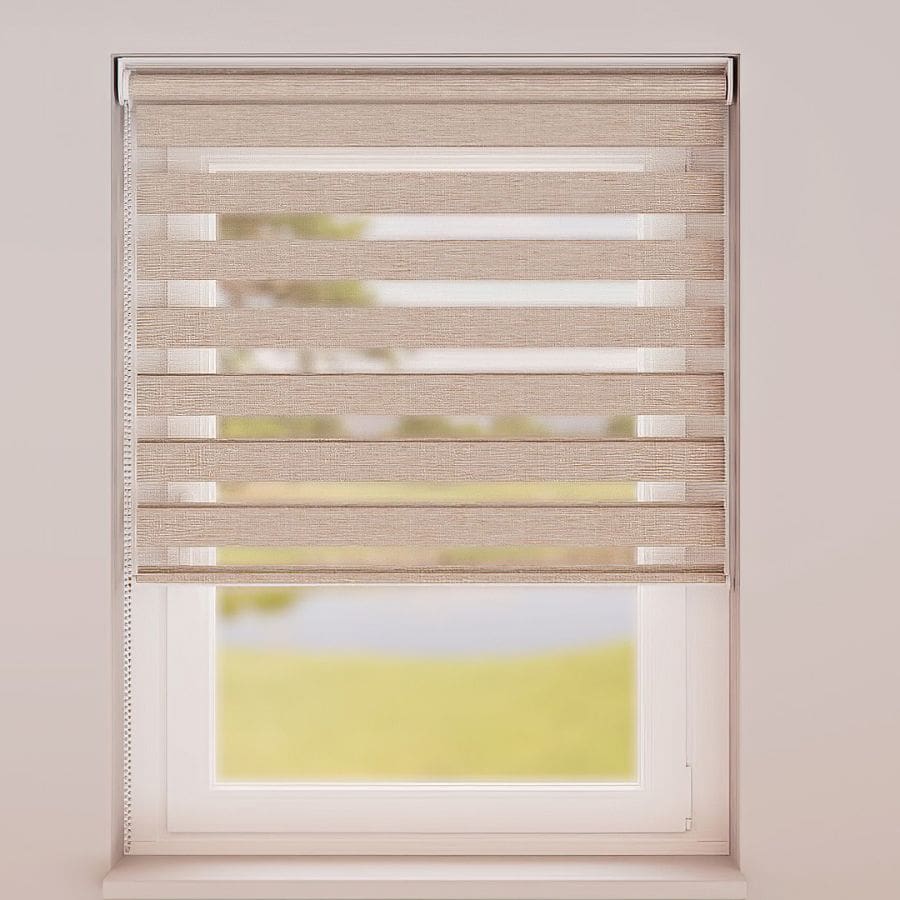
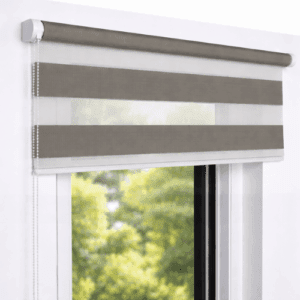
Day-night roller blinds
The overlap of the fabric bands in day-night roller blinds may vary slightly. The degree of variation may increase as the dimensions of the roller blind approach the maximum permitted limits.
For roller blinds with wider fabrics, whether classic or day-night, slight waviness of the fabric may occur.
Roller blind fabric cleaning recommendations
For routine cleaning of roller blind fabric, a duster or soft brush is sufficient. If the fabric is not coated with aluminium, PERLEX or another light-reflective material, dust and other light surface dirt may be removed using a soft, damp cloth. Roller blind fabrics are not designed for frequent or intensive cleaning.
The cloth must be clean and should be lightly dampened with demineralised water, such as distilled water. Allow the water to absorb into the cloth before gently wiping the roller blind fabric. Care should be taken to prevent water droplets from forming on the fabric, and the fabric must not become soaked. Under no circumstances should the fabric be rubbed vigorously, washed, creased during cleaning or subjected to any other treatment not described here that could damage its properties or appearance. After cleaning, the fabric should be fully unrolled and left to dry completely to prevent creasing.
The fabric must never be ironed. Do not touch the fabric with wet, dirty, sweaty or greasy hands. Chemical, acidic, alkaline or other chemical cleaning agents must not be used to clean the fabric. The fabric must not be subjected to mechanical damage or stress, such as folding, scratching or similar actions.
Environmental factors
Roller blinds must not be installed in close proximity to devices that may affect the physical properties of the fabric, such as heaters, humidifiers, air conditioners or similar appliances where heat, cold or moisture creates a direct airflow towards the roller blind fabric.
These instructions are provided for guidance only. LLC DEXTERA accepts no liability for damage to roller blind fabric resulting from window or room cleaning, chemical or mechanical exposure, inadequate ventilation, moisture or contact with water.

Product dimensions may vary by up to ±2 mm.
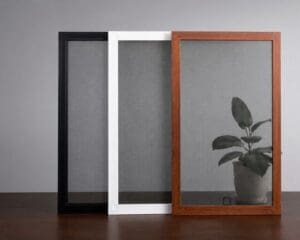
The colour shade of the netting and/or components may vary slightly from the samples.
Colour shades may vary between different Products (e.g. between the frame of a fixed net, a roller net and a net door). Colour variations may also occur between rectangular net frames and net frames of other shapes.
The colour shades of painted aluminium profiles and plastic components may differ from one another. Painted aluminium components are considered to meet the applicable quality requirements if there are no inclusions larger than 1 mm, the distance between adjacent minor inclusions exceeds 10 mm, and the average number of minor inclusions does not exceed 1 per dm². Paint runs are not acceptable; minor isolated scratches on the painted surface are permissible. No defects shall be visible to the naked eye from a distance of 3 metres when viewed at an angle of 60 degrees.
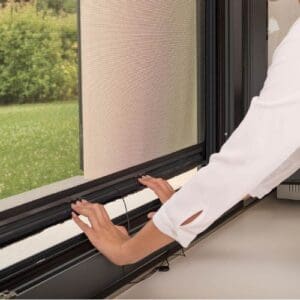
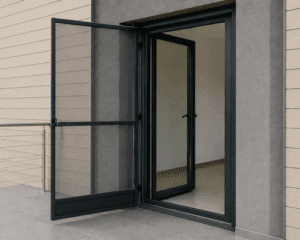
The netting itself must not be touched, pressed, pushed or pulled, as this may damage the netting or cause it to become detached from the supporting metal structure. Nets, including net doors, roller nets and pleated nets, must only be operated using the designated handles, grips or cords and must never be pushed or pulled by the netting itself.
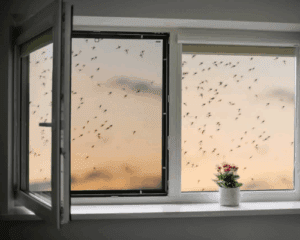
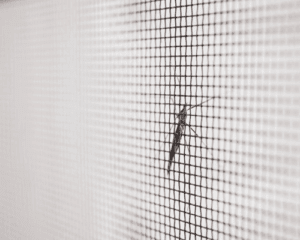
Nets prevent insects from passing through them in either direction. Therefore, if insects enter the premises through another open area that is not protected by a net, they will not be able to leave through an opening protected by a net. Such insects may attempt to exit through areas where air is circulating, including through the net, and may therefore often be found on the inside surface of the netting.
If a net is installed incorrectly and there are gaps between its aluminium profiles and the window or door frame, insects may pass through these gaps. Nets do not prevent insects from entering the premises through other parts of the window or door structure that are not protected by the net, such as condensation drainage openings in the window or door profiles.
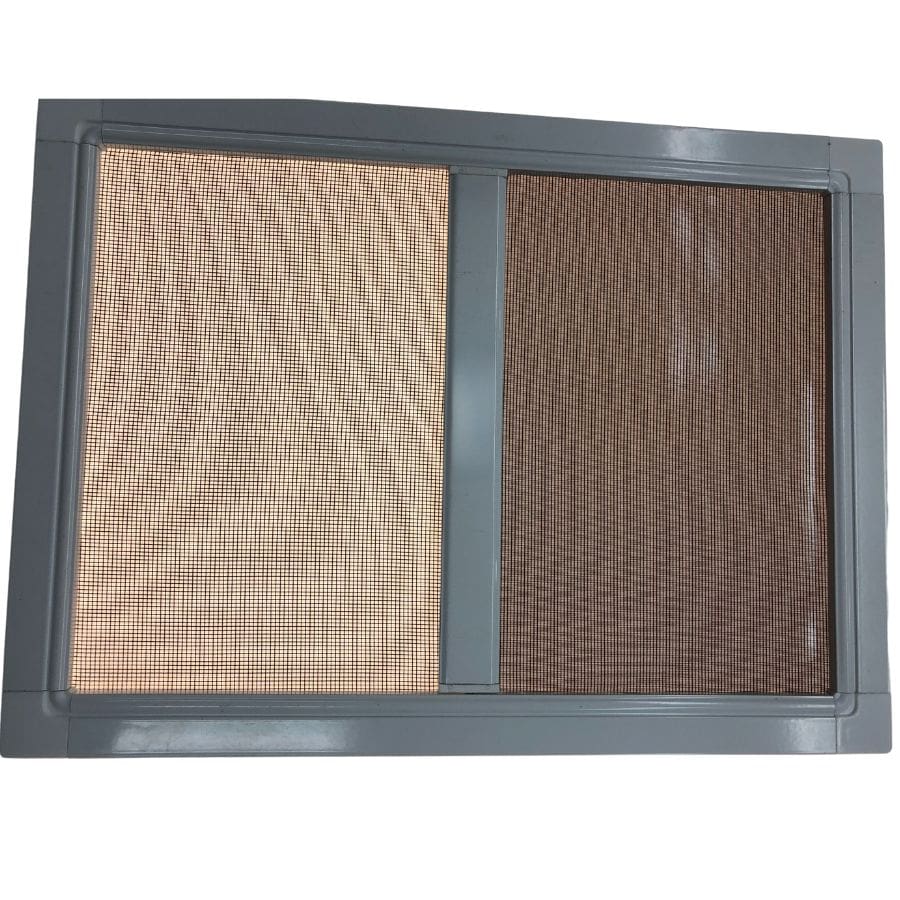
The anti-allergy netting is denser than standard netting and is made from a different material. As a result, its colour differs (it is typically black rather than grey), it is less transparent and allows less airflow.
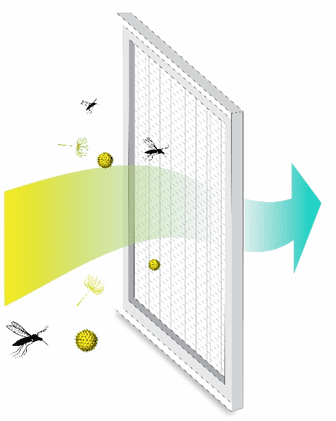
Nets do not guarantee complete protection against insects, as very small insects may pass through the openings in the netting. The purpose of the net is to significantly reduce the likelihood of insects entering the premises.
In strong winds or as a result of external mechanical impact, the netting of a roller net may be pushed out of the guide rails. However, if the netting returns to its correct position and functions properly after the Product has been raised and lowered again, this shall not be considered a Product defect.
During the colder months, it is recommended that the net be removed to prevent potential damage. One of the most common causes of damage is birds pecking at insects trapped in the netting.
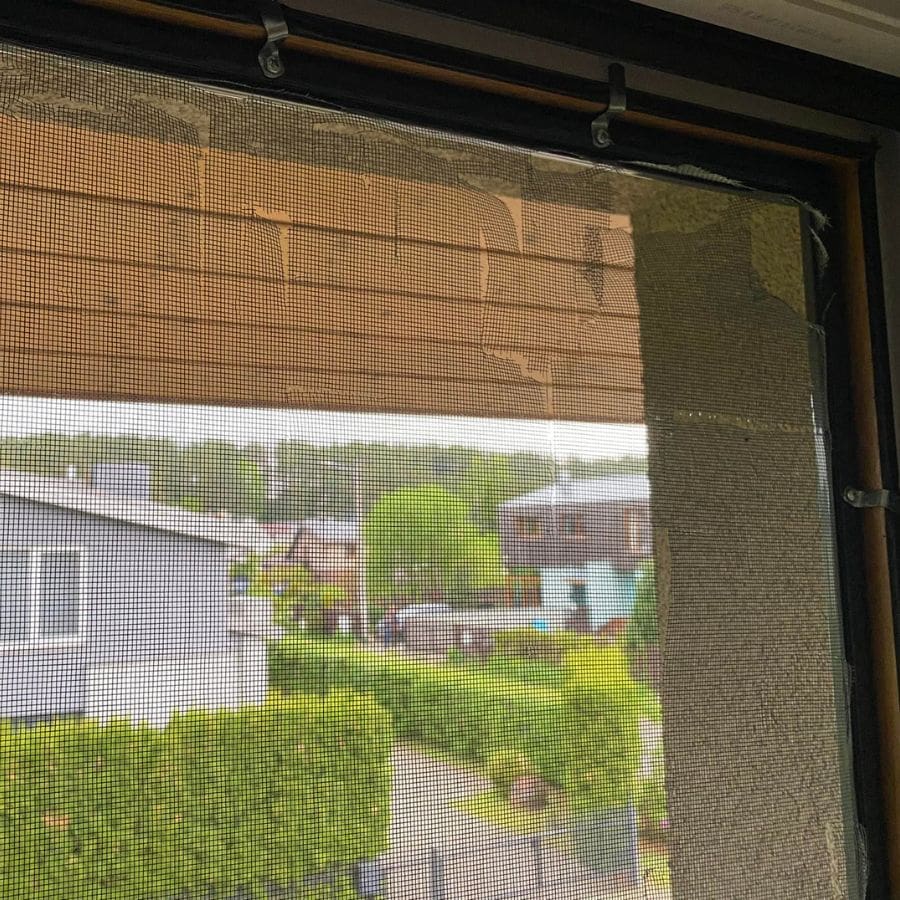
During the colder months, it is recommended that the net be removed to prevent potential damage. One of the most common causes of damage is birds pecking at insects trapped in the netting.
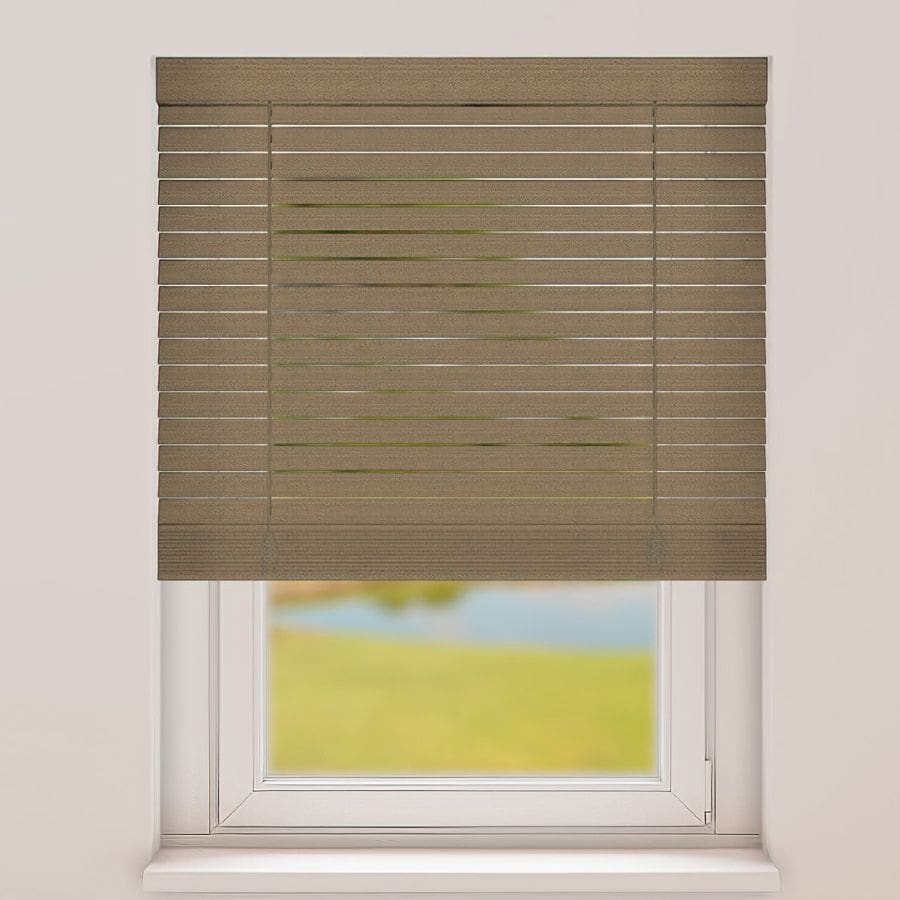
Product dimensions may vary by up to ±2 mm.
1. Natural variations in wood
Variations in the wood that are not visible from a distance of 1 metre or more are not considered defects.
Minor variations in the wood that are visible from a distance of less than 1 metre are acceptable where they consist of:
a) zigzag wood joints that are visible solely due to differences in the wood grain and colour (there is no limit on the number of such joints);
b) barely noticeable joints located along the edge of a slat or the headrail/bottom rail;
c) thinning of the paint coating, discolouration or a small paint blister, provided that the diameter of the affected area does not exceed 2 mm.
2. Product labelling
LLC DEXTERA labels venetian blinds, as well as its other Products, with a trademark sticker. It is recommended that the sticker not be removed. If the sticker is removed, the Buyer assumes full responsibility for any consequences arising from its removal.
3. Use
Venetian blinds are designed to hang freely so that the wooden slats do not come into contact with other surfaces, such as walls, window frames or curtains. If the Product comes into contact with or rubs against other surfaces, for example when moved by hand or due to draughts, colour transfer may occur, whereby a darker surface may stain a lighter surface or vice versa.
For example, if the walls are white and the Product is black, the black venetian blinds may leave marks on the wall. Conversely, if the walls are dark and the Product is light-coloured, paint from the wall may transfer onto and discolour the Product.
4. Motorised venetian blinds
The motors are not designed for continuous operation of the venetian blinds. They may operate continuously (raising or lowering the blinds and tilting the slats) for no longer than 3–5 minutes. If the motor operates for longer, its thermal protection system will activate and automatically switch the motor off. The motor may require approximately 15 minutes to cool down before returning to normal operation. The operating time may vary depending on the size of the venetian blinds and the ambient temperature.
5. Permissible variations in slats
Twisting – up to 2 mm/m.
Horizontal curvature – up to 2 mm/m.
Longitudinal bowing:
* where the blind width L ≤ 1.5 m – up to 3 mm;
* where 1.5 < L < 2.5 m – up to 4.8 mm;
* where L > 2.5 m – up to 6.35 mm.
Transverse bowing is not permitted.
These tolerances apply to newly manufactured venetian blinds.
Natural wood slats may deform beyond the tolerances specified above when exposed to changes in humidity and temperature.
6. Intensity of use and wear
Venetian blinds are designed for moderate use. Intensive use may result in faster wear of operating components, such as cords, bushings and gear mechanisms. This is considered normal wear and tear and is therefore not covered by the warranty.
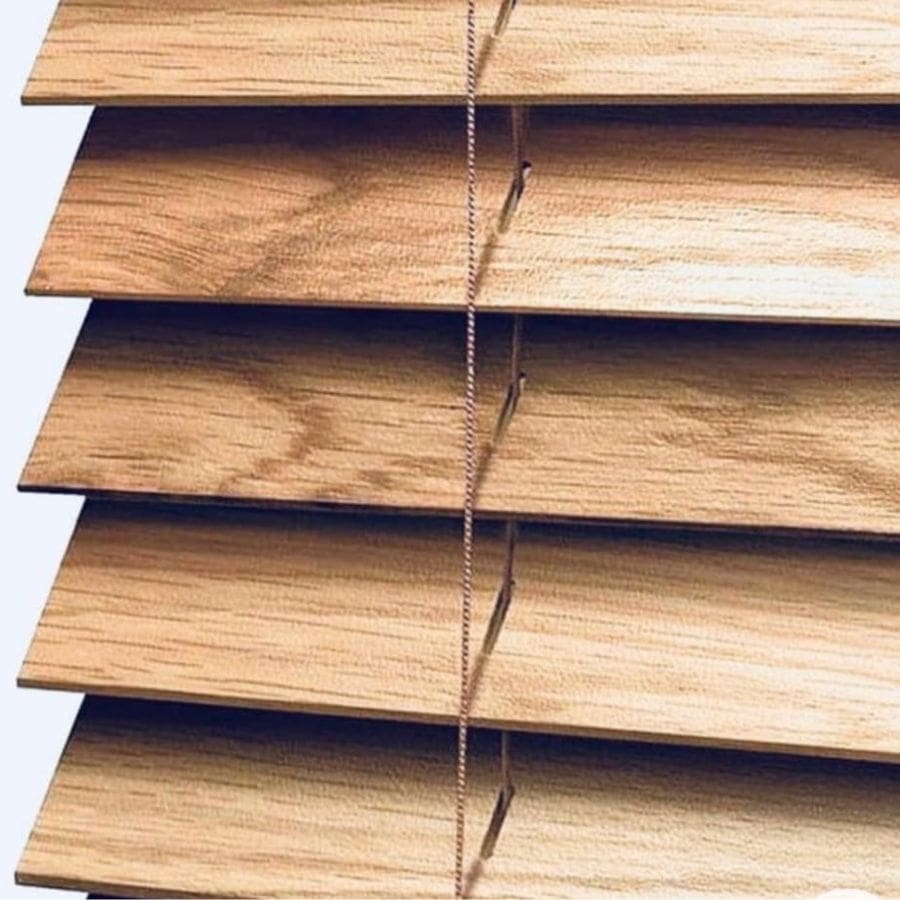
Venetian blinds are made from natural wood; therefore, the slats may exhibit natural characteristics of the material, such as knots, variations in grain patterns and subtle differences in colour.
Product dimensions may vary by up to ±2 mm.
The colour shades of the blind components may vary slightly from the samples. Slight colour variations may also occur between different components of the Product, such as the slats, headrail, bottom rail and cords.
Painted aluminium and steel components are considered to meet the applicable quality requirements if there are no inclusions larger than 1 mm, the distance between adjacent minor inclusions exceeds 10 mm, and the average number of minor inclusions does not exceed 1 per dm². Paint runs are not acceptable; minor isolated scratches on the painted surface are permissible. No defects shall be visible to the naked eye from a distance of 3 metres when viewed at an angle of 60 degrees.
The slats must not be touched, pressed, pushed, pulled or forced apart, as this may damage the slats or the supporting components.
Aluminium blinds must only be operated using the control cords, control wand, control chain or motor, and not by handling the blind itself.
Aluminium blinds are not designed to provide complete room blackout. Light, including direct sunlight, may enter the room through the gaps between the slats, through the cord holes in the slats and around the edges between the blind and the window, even though the slats themselves are completely opaque.
Aluminium blinds are manufactured to a height that is not less than the ordered height. If the ordered height does not correspond to the spacing between the slats, the blind will be manufactured to the next applicable slat position. As a result, the finished blind may be between 0 and 14 mm higher than the ordered height for blinds with 16 mm slats, and up to 22 mm higher for blinds with 25 mm slats. This should be taken into account when placing an order. During use, the additional height can be compensated for by raising the blind slightly.
Aluminium blinds are designed for moderate use. Intensive use may result in faster wear of operating components, such as cords, bushings and gear mechanisms. This is considered normal wear and tear and is therefore not covered by the warranty.
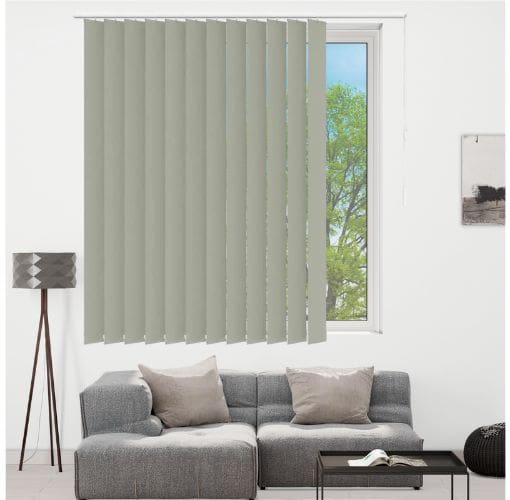
Product dimensions may vary by up to ±2 mm/m.
The colour shades of the blind components may vary slightly from the samples.
Painted aluminium and steel components are considered to meet the applicable quality requirements if there are no inclusions larger than 1 mm, the distance between adjacent minor inclusions exceeds 10 mm, and the average number of minor inclusions does not exceed 1 per dm². Paint runs are not acceptable; minor isolated scratches on the painted surface are permissible. No defects shall be visible to the naked eye from a distance of 3 metres when viewed at an angle of 60 degrees.
The vertical blind louvres must not be pushed, pulled or lifted by hand, as this may damage the louvres or their supporting components. Vertical blinds must only be operated using the control cords, control wand, control chain or motor, and not by handling the blind itself.
Vertical blinds are not designed to provide complete room blackout, even when blackout (BO) fabrics are used. Light, including direct sunlight, may enter the room through the gaps between the louvres, above and below the blind, and around the edges between the blind and the window.
Where fabrics with geometric patterns, such as stripes, squares, waves or similar designs, are used, the alignment of the pattern may not correspond exactly with the geometry of the Product. The geometric elements may not align precisely with the top, bottom or side edges of the fabric, and the pattern on one louvre may not align with the pattern on another louvre. Such variations are not considered a Product defect.
The headrail of the vertical blind must be installed level and straight. If it is not correctly aligned, the louvres may become obstructed and the operating mechanism may not function properly.
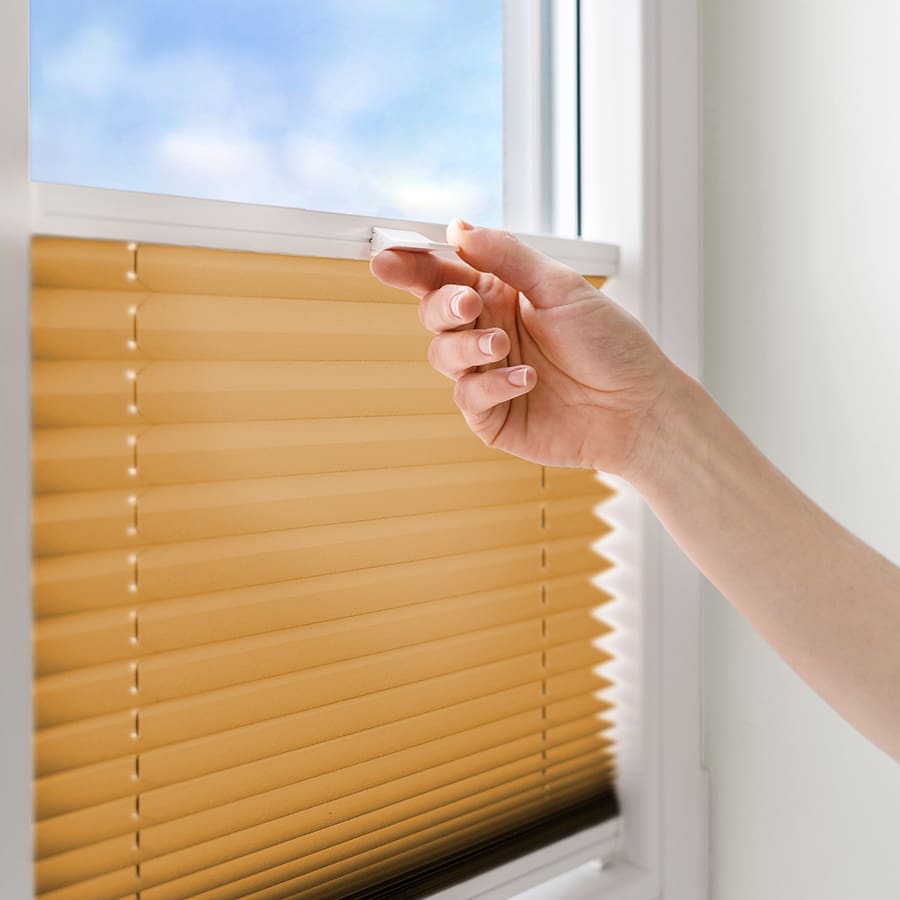
Product dimensions may vary by up to ±2 mm.
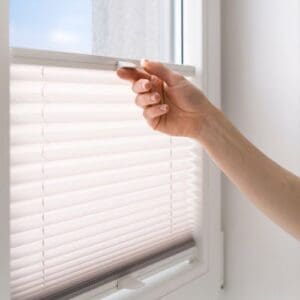
The pleats of the blind fabric must not be pushed, pulled or lifted by hand, as this may damage the fabric or its supporting components. Pleated blinds must be operated by raising or lowering the top or bottom rail using the designated handle.
Pleated blinds are not designed to provide complete room blackout, even when blackout (BO) fabrics are used. Light, including direct sunlight, may enter the room through the gaps between the fabric and the glazing beads, above and below the blind, and through the holes in the fabric for the support cords.
Where fabrics with geometric patterns, such as stripes, squares, waves or similar designs, are used, the alignment of the pattern may not correspond exactly with the geometry of the Product. The geometric elements may not align precisely with the top, bottom or side edges of the fabric or with the fabric pleats. Such variations are not considered a Product defect.
Pleated blinds must not be pulled away from the glass, even when held by the designated handle, as this may overstretch and damage the springs supporting the fabric. The blind must be operated by moving the handles parallel to the glass. The top and bottom rails must remain horizontal during operation.
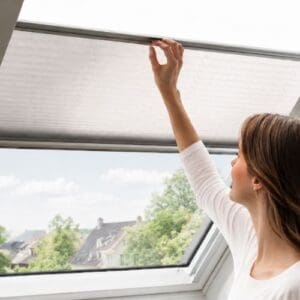
For pleated blinds installed on roof windows, the fabric must not be pulled out of the guide rails, as this may damage the blind.
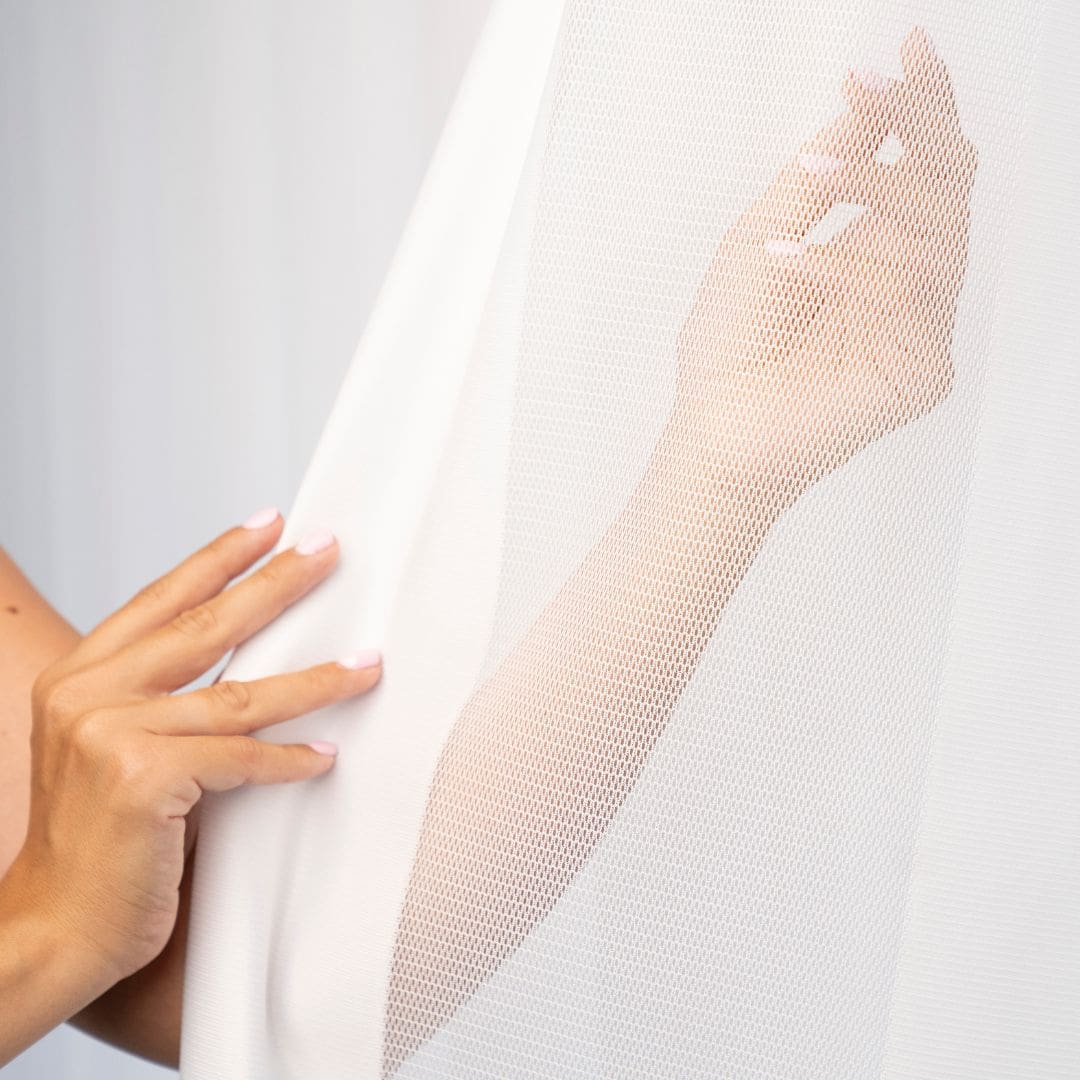
1. Use
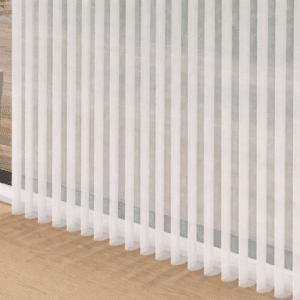
It is not recommended to install Sheer vertical blinds Harmony (hereinafter referred to as the Products) in damp or unheated rooms.
The Products should be operated with care. Sudden or forceful pulling may damage the operating mechanism or fabric.
The operating components of the Products must not be removed.
The operating mechanisms, fabrics and other components of the Products must not be subjected to chemical or mechanical impact. Touching the fabric may cause staining, creasing or other damage. The manufacturer accepts no liability for Products damaged by chemical or mechanical impact.
If the Product does not operate properly, discontinue use and contact LLC DEXTERA specialists immediately.
2. Cleaning
The fabric must not be washed in a washing machine.
For routine cleaning, a duster, soft brush or lint roller is sufficient.
If the fabric becomes soiled, it may be cleaned with a clean, damp cloth. It is recommended to lightly dampen the cloth with demineralised water, such as distilled water, allow the water to absorb into the cloth, and then gently clean the fabric while avoiding the formation of water droplets. The fabric must not become soaked. Do not rub or crease the fabric vigorously or subject it to any other treatment that could damage its properties or appearance.
The fabric may be hand-washed at 30 °C using a mild detergent. After washing, it is recommended to hang the fabric and allow it to dry naturally.
Do not touch the fabric with wet, dirty, sweaty or greasy hands. Chemical, acidic, alkaline or other aggressive cleaning agents must not be used on the fabric or other Product components. The Product must not be subjected to mechanical damage or stress, such as bending or scratching.
3. Environmental factors
These instructions are provided for guidance only. LLC DEXTERA accepts no liability for damage to the blind fabric resulting from window or room cleaning, chemical or mechanical exposure, inadequate ventilation, moisture or contact with water.
Changes in the Products may occur as a result of prolonged exposure to intense sunlight, moisture and other environmental factors. Insufficient ventilation may cause condensation to accumulate on the fabric, which may subsequently lead to mould growth.
The Products should not be installed in close proximity to devices that may affect the properties of the fabric, such as heaters, humidifiers, air conditioners or other appliances where heat, cold or moisture is directed towards the fabric.
When cleaning windows, building structures or equipment located near the Products, the Products must be fully raised or drawn to the side and protected from external factors such as cleaning agents, dust, mechanical contact and other potentially damaging influences.
4. Operation
The blind louvres must only be rotated by pulling the operating chain.
The blind louvres must only be drawn to the side by pulling the operating cord.
The operating chain and cord must only be pulled vertically downwards.
5. Use
The headrail, operating mechanism and fabric louvres must not be subjected to mechanical impact.
Mechanical damage to the headrail, such as denting, crushing or bending, may damage the operating mechanism, headrail brackets or other components of the blind.
Professional installation of the blinds can be carried out by LLC DEXTERA specialists. If the installation service is declined, no warranty shall apply to installation work performed by third parties or by the Customer.
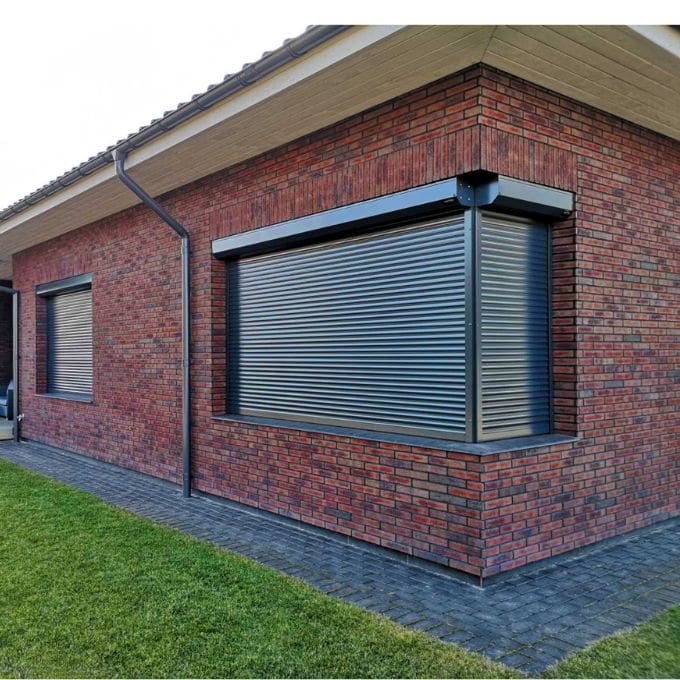
Product dimensions may vary by up to ±2 mm/m.
The colour shades of the blind components may vary slightly from the samples.
The colour shades of individual blind components may vary slightly from one another.
Painted aluminium and steel components are considered to meet the applicable quality requirements if there are no inclusions larger than 1 mm, the distance between adjacent minor inclusions exceeds 10 mm, and the average number of minor inclusions does not exceed 1 per dm². Paint runs are not acceptable; minor isolated scratches on the painted surface are permissible. No defects shall be visible to the naked eye from a distance of 3 metres when viewed at an angle of 60 degrees.
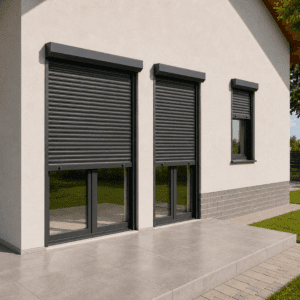
The roller shutter must not be operated when it is covered with ice. Any ice must be removed before operating the shutter using the motor or manual control mechanism. Operating the shutter while it is covered with ice may damage the Product.
The roller shutter must not be raised or lowered directly by hand, except for spring-operated models designed for manual operation. When partially raised, the shutter must not be supported or held in position using any object.
The roller shutter reaches its full strength when it is fully lowered and all slats are resting against one another.
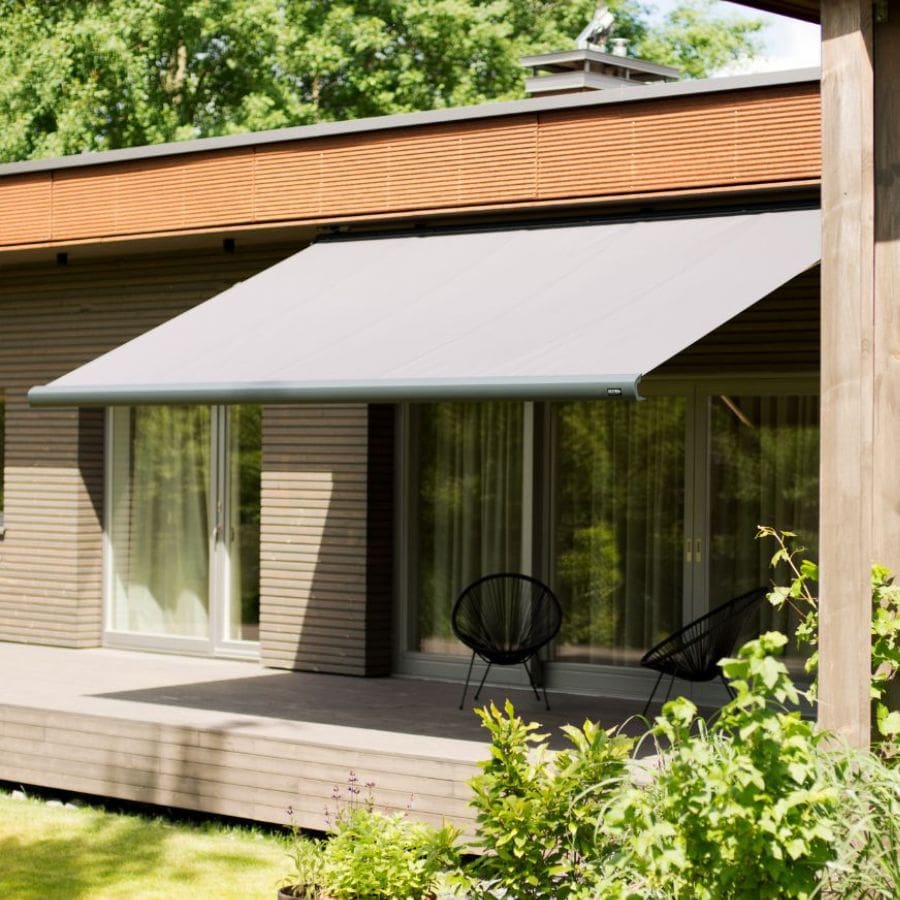
Product dimensions may vary by up to ±25 mm.
Fabric. Depending on the dimensions of the Product, ambient humidity and the properties of the fabric, the awning fabric may come into contact with the folding arms.
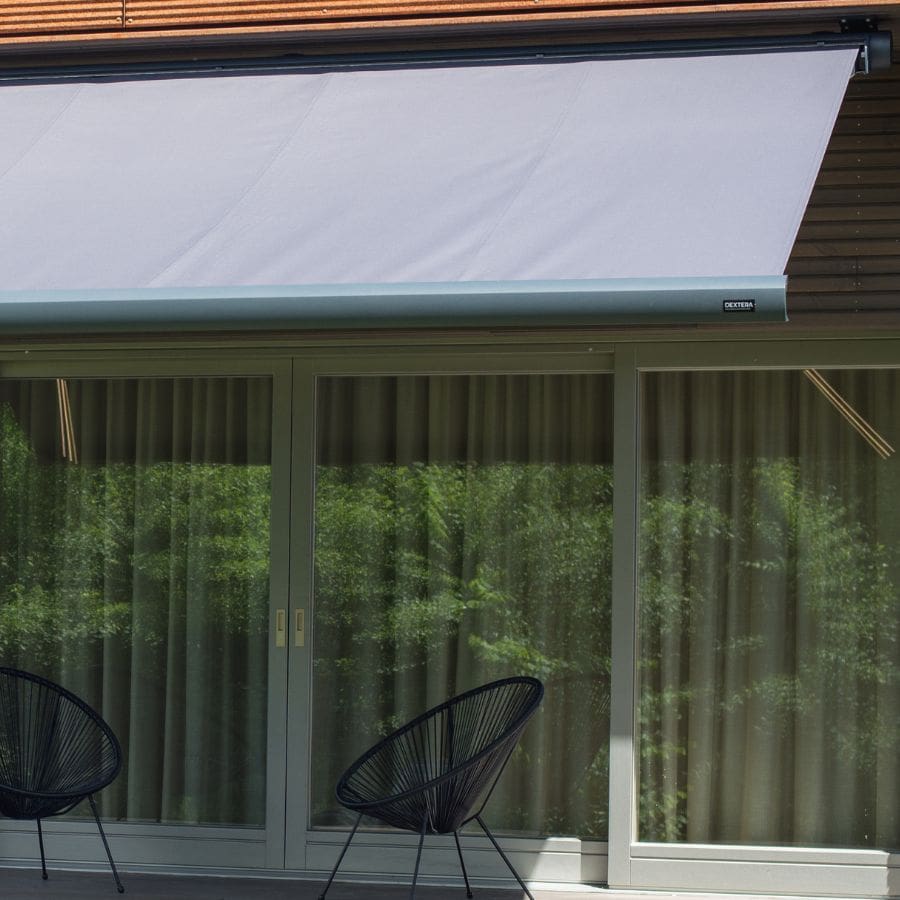
Fabric creasing and waviness
Creases may occur during the cutting or sewing of the fabric, or when the fabric is attached to the awning frame. A light-coloured line may be visible along the crease, particularly on lighter fabrics. When viewed against the light, this line may be mistaken for a mark or a streak of dirt.
Fabric waviness. At the seams and edges of the fabric, the material is twice as thick. When the fabric is rolled around the roller tube, these areas are subjected to greater tension, which may result in a slight waviness effect in the fabric.
Elongation of the fabric edges. The awning fabric is under constant tension, while the seams and hemmed edges provide additional reinforcement. When the awning is retracted, additional tension is created along the seams and edges of the fabric. As a result, waviness may occur along the edges of the fabric.

“Honeycomb effect”. To ensure optimal absorption of tensile forces, the vertical threads are woven more densely than the horizontal threads. This difference in the weave may cause the so-called “honeycomb effect”, where visible waviness or creasing may develop in certain areas of the fabric. In very rare cases, this effect may also occur in the middle of the fabric.
The “honeycomb effect” may become more noticeable under certain lighting conditions and may be particularly pronounced as a result of moisture and improper operating conditions.
It is important to note that an awning is primarily designed to provide protection from the sun and is not intended to be used as protection from rain, particularly heavy or prolonged rainfall. Water accumulating on the fabric of an extended awning during rain creates additional weight and significant tensile forces. As a result, wet fabric may stretch unevenly, its tension may change, and the “honeycomb effect” may become more pronounced.
It is particularly important not to retract wet fabric into the awning cassette. When damp fabric is rolled up, it is subjected to uneven pressure and tension within the roll. Once dry, visible creases, waviness or the “honeycomb effect” may remain. The greater the amount of rain or water to which the fabric has been exposed, and the longer it remains rolled up while damp, the greater the likelihood of such fabric deformation.
Therefore, if pronounced localised waviness or the “honeycomb effect” develops in the awning fabric, one possible and likely cause is the use of the Product during rain and/or retracting the fabric while it is damp. Such changes in the fabric may be related to the conditions in which the Product has been used rather than to a manufacturing defect in the fabric.
Recommendation: Use the awning primarily for protection from the sun. If heavy rain begins, it is recommended that the awning be retracted. If the fabric becomes wet, allow it to dry completely in the extended position whenever possible before retracting it into the cassette.
Fabric thickness. The weaving and spinning processes involve high tensile forces, which may occasionally cause a thread to break. As a result, the thickness of the fabric may vary slightly in certain areas, and under certain lighting conditions lighter areas or a thread knot may be visible.
Such minor variations in the fabric structure are inherent to the textile manufacturing process and do not in themselves indicate a defect in the quality or functionality of the fabric.
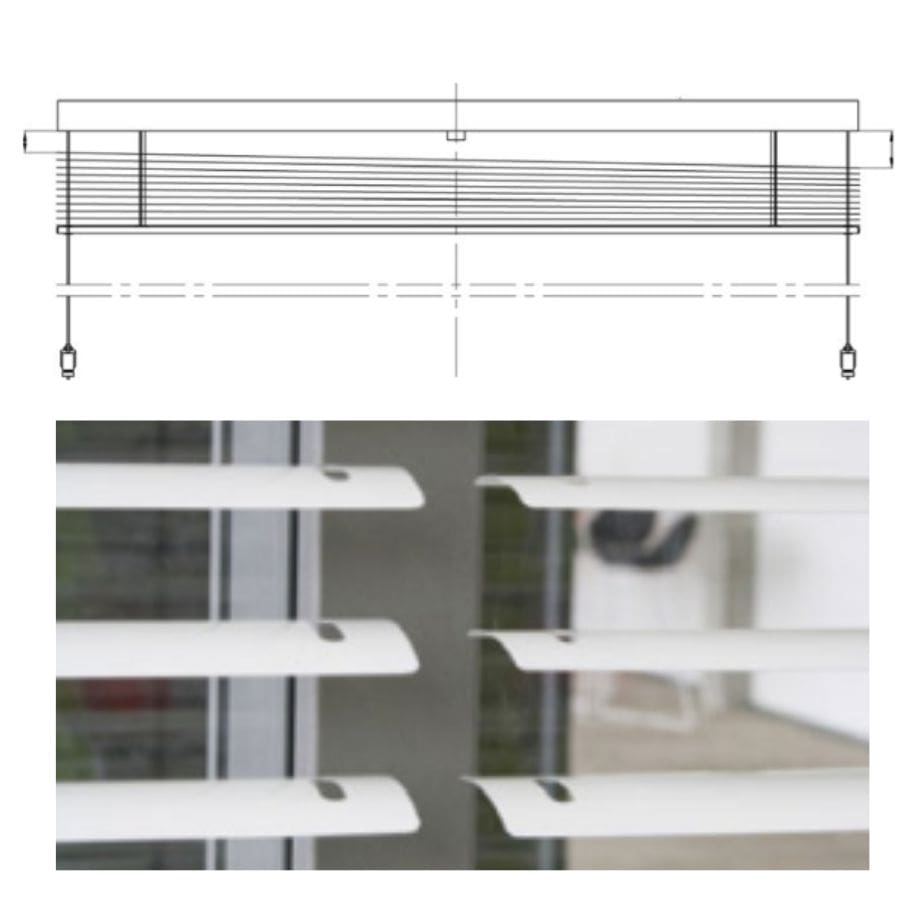
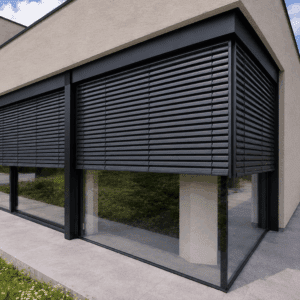
Different slat tilt angles. When facade blinds are installed next to each other or connected by a common guide rail, the tilt angles of the slats may differ. The difference between the slat tilt angles may be up to 20°.
Arrow effect.In narrow and tall facade blinds, the ladder cords may become caught between the slats as the blind is raised, causing one side of the blind to rise higher than the other. This effect is most commonly observed in blinds where the width-to-height ratio exceeds 1:4.
Bottom rail deflection. For wider facade blinds, the bottom rail may exhibit slight visible deflection.
Headbox tolerances. The permissible tolerance for headbox bending and length is up to 5 mm.
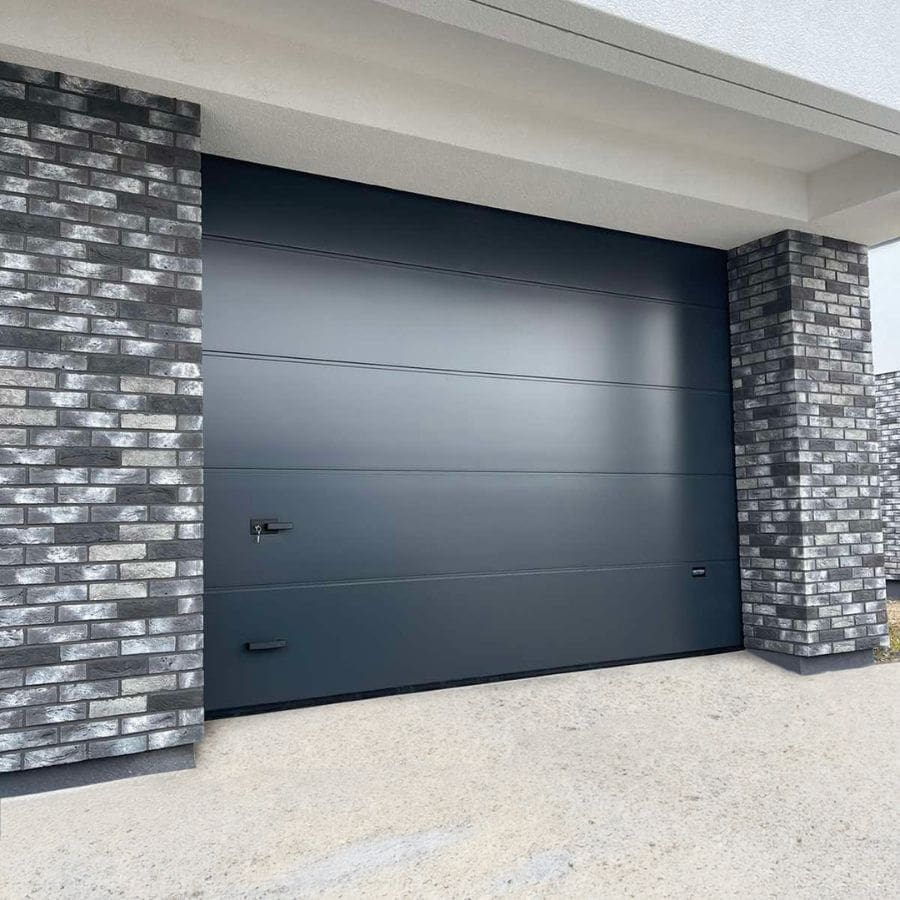
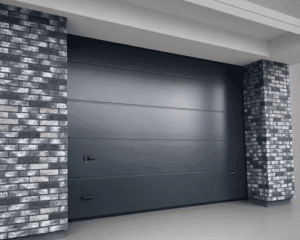
The difference between the diagonal measurements of the installed garage gate must not exceed 2 mm.
Where there is a significant difference between the indoor and outdoor temperatures, the garage gate panel may bow due to thermal expansion or contraction. The deflection should not exceed 1/150 of the garage gate width. If this limit is exceeded, use of the garage gate should be discontinued immediately until the temperature difference decreases.
Condensation on the inside surface of the window is acceptable.
The garage gate is designed for use where the relative humidity does not exceed 90% indoors and 100% outdoors.
The operating temperature range of the garage gate is from −45 °C to +40 °C.